Luxury Window Engineering USA: The Architectural Guide
The American luxury housing market is undergoing a structural re-engineering of its relationship with the external environment. The punched window openings of the past, characterized by conventional double-hung mechanisms and thick, obtrusive frames, are no longer sufficient to meet the demands of contemporary high-end residential architecture. Luxury Window Engineering USA. Today, the building envelope is treated as an active, thermodynamic membrane designed to dissolve the boundary between the interior living space and the surrounding landscape. The discipline that governs this transition is a highly specialized field at the intersection of material science, structural engineering, and precision mechanics.
This evolution in residential design is driven by a complex set of priorities. High-net-worth clients demand absolute transparency and unobstructed vistas, yet they also require structures that conform to the most stringent energy codes in the world, such as those found in California and the coastal zones of the Northeast. Achieving these dual objectives requires an infrastructure of steel, thermally broken aluminum, and advanced multi-layer glass assemblies capable of resisting hurricane-force winds while maintaining a minimalist aesthetic. The engineering of these fenestration systems demands an analytical approach to thermal bridging, structural deflection, and acoustic dampening.
In this editorial survey, we deconstruct the mechanical, ecological, and economic frameworks that define the current state of high-end fenestration in the United States. By examining the structural limits, maintenance governance, and risk landscapes of these advanced systems, we move beyond aesthetic appreciation toward a definitive understanding of how the world’s most advanced openings are designed, manufactured, and maintained.
Understanding “luxury window engineering usa”
To evaluate the nuances of luxury window engineering usa, one must first distinguish between architectural “glazing” and advanced “fenestration.” While standard production windows serve primarily as elements to allow light and ventilation, a true luxury system is an integrated mechanical assembly. It functions as a dynamic interface that must resist high wind loads, manage condensation, and restrict thermal transference. The term “luxury” in this context refers to the precision of the mechanics—such as flush-mounted floor tracks, concealed motor drives, and multi-point locking mechanisms that operate with minimal human effort despite the massive weight of the insulated glass units.
A multi-perspective analysis of the sector reveals that the oversimplification risk is highest when fenestration is viewed purely through the lens of thermal transmittance, or U-factor. While a window may achieve an exceptional U-factor, it may fail under dynamic structural loads or acoustic challenges. High-end projects require an examination of frame-to-wall interface details, water penetration resistance, and long-term durability in marine or high-altitude alpine environments.
The engineering of these systems involves an asymmetric distribution of resources. For example, a single panel of structurally glazed, oversized sliding glass can weigh upwards of 2,000 pounds. This requires the development of reinforced structural headers and recessed stainless steel tracks with integrated drainage systems. The design must ensure that even a micro-deflection in the building’s concrete foundation does not bind the operating mechanism or cause point-loading stress fractures in the glass lites.
Contextual Background: The Evolution of Fenestration Technology
The history of American residential fenestration is a narrative of escalating performance requirements and material refinement. During the early twentieth century, residential windows were manufactured primarily from wood, with single-pane glass held in place by linseed oil putty. These systems were characterized by high air infiltration rates and low thermal resistance, requiring heavy reliance on mechanical heating.
The energy crises of the 1970s prompted a significant change in the industry. The introduction of the first insulated glass units (IGUs) and the development of low-emissivity (Low-E) metal oxide coatings in the 1980s allowed for better control of radiant heat transfer. However, these early systems were often housed in standard aluminum frames, which acted as thermal bridges, transferring cold and heat directly into the home and causing interior condensation.
The current century has seen the rise of performance-driven engineering. The demand for large-format glass systems led to the adoption of thermally broken aluminum extrusions and high-precision stainless steel frames. These materials possess low thermal conductivity and high structural rigidity, allowing for significantly larger expanses of glass without an increase in frame thickness.
Conceptual Frameworks and Design Mental Models
To analyze the performance of advanced window systems, engineers and architects apply several distinct conceptual frameworks:
1. The Thermodynamic Balance Model
This framework treats the window opening as a selective thermodynamic filter. It evaluates the interaction between conductive heat loss ($U$-factor), solar heat gain coefficient ($SHGC$), and visible light transmittance ($VLT$). The engineering goal is to maximize natural illumination while restricting the transfer of infrared energy into the living space, or retaining internal energy during winter conditions.
2. The Structural Deflection Model
This model assesses the behavior of large-format glazing lites under wind-load pressures. It calculates the deflection of the glass surface and the resulting stress concentrations at the edges. This ensures that lites do not touch one another within the IGU, nor do they pop out of their structural rabbets during severe weather events.
3. The Biophilic Interface Model
This model evaluates the psychological and physiological impacts of fenestration on occupants. It focuses on non-rhythmic sensory stimuli, such as the quality of natural light and the clarity of the view. The objective is to design transitions between the indoor environment and the outdoors that minimize visual distortion and maximize acoustic comfort.
Taxonomy of High-End Window Systems and Variations
High-end window variations are defined by their operating mechanisms, material composition, and performance profiles.
| System Category | Technical Mechanism | Framing Material | Best Use Case |
| Lift-and-Slide Doors | Gaskets drop down to seal; panel lifts on rollers | Thermally broken aluminum / Stainless steel | Wide openings; high wind exposure |
| Pivoting Doors | Vertical axis pin hinges | Bronze / Thermally broken steel | Main entrances; large-scale facades |
| Guillotine Windows | Counterweight vertical sliding | Structural steel | Multi-story retracting walls |
| Slim-Profile Casement | Concealed multi-point hardware | Extruded aluminum / Wood composite | Historical restoration; high thermal efficiency |
| Structural Steel Windows | Narrow profiles; welded joints | High-strength carbon steel | Minimalist aesthetics; high rigidity |
| Minimalist Sliding Walls | Very narrow sightlines; flush tracks | Anodized aluminum | Indoor-outdoor living spaces |
Realistic Decision Logic
The choice of a system depends on structural and environmental constraints. For example, in high-wind zones along the Atlantic coast, Lift-and-Slide systems are preferred because their mechanical gaskets compress against the frame, providing better water and air infiltration resistance than conventional sliding glass doors.
Detailed Real-World Scenarios and Case Studies Luxury Window Engineering USA
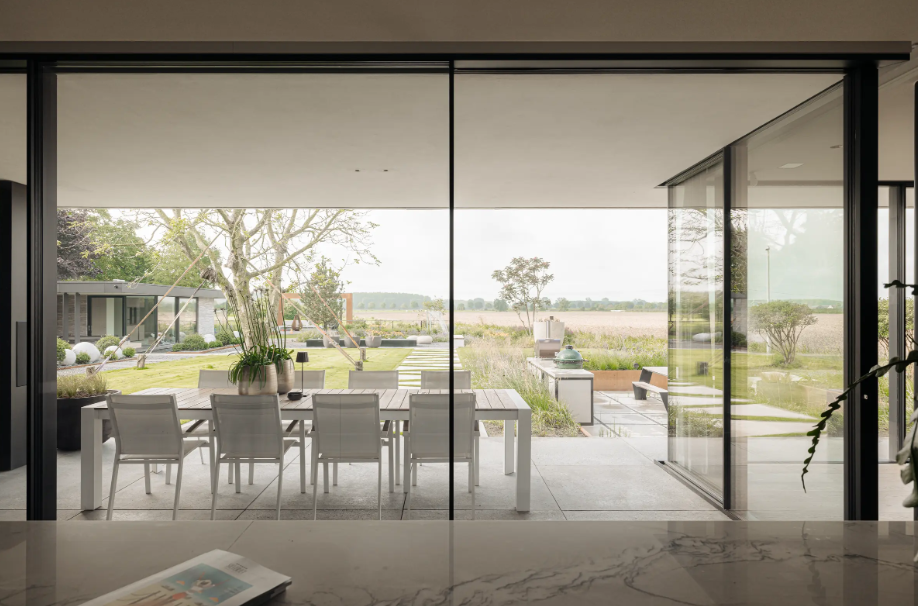
Scenario: The Coastal Exposure (Big Sur, CA)
A luxury residence situated on a coastal cliff is exposed to high winds, seismic activity, and saline mist.
-
Constraints: Salt spray causes accelerated corrosion of hardware; seismic movement can twist the structural frame.
-
Decision Point: Selection of marine-grade 316 stainless steel hardware and heavy-gauge, thermally broken aluminum frames with multi-point locking rods.
-
Failure Mode: Standard steel profiles would rust, and un-isolated aluminum would pit due to galvanic reactions with stainless fasteners.
-
Second-Order Effect: The use of specialized fluoropolymer finishes prevents surface degradation and reduces lifecycle maintenance costs by 30%.
Scenario: The Alpine Retreat (Aspen, CO)
A residence located at an elevation of 8,500 feet experiences extreme temperature differentials and heavy snow loads.
-
Constraints: Interior humidity meets freezing exterior temperatures, creating a high risk of condensation and thermal bridging.
-
Decision Point: Installation of triple-pane insulated glass units with warm-edge spacers and insulated fiberglass-reinforced frames.
-
Outcome: The interior surface temperature of the glass remains high enough to prevent condensation, maintaining indoor air quality and protecting adjacent wood finishes.
Scenario: The Desert Estate (Scottsdale, AZ)
A desert residence must cope with intense heat gain and ultraviolet exposure.
-
Constraints: Direct sunlight causes fading of interior fabrics and high air-conditioning loads.
-
Decision Point: Application of spectrally selective Low-E coatings on ultra-clear, low-iron glass, paired with deep structural overhangs and automated exterior venetian blinds.
-
Second-Order Effect: The reduction in solar heat gain allows the mechanical cooling plant to be downsized by 20%, saving on capital costs.
Planning, Cost, and Resource Dynamics
The implementation of high-end fenestration requires a significant capital investment. The following figures reflect current market rates for systems produced by top-tier fabricators.
| System Class | Direct Cost (per sq. ft.) | Maintenance Intensity | Energy Performance Index |
| Premium Steel Windows | $220 – $400 | Moderate | Excellent |
| Lift-and-Slide Systems | $180 – $320 | High | Very Good |
| Minimalist Aluminum | $140 – $260 | Low | Good |
| Motorized Pivot Systems | $300 – $500+ | High | Moderate |
Range-Based Table: Water Penetration Resistance
-
Standard Builders Series: Up to 300 Pa
-
High-Performance Luxury Units: 600 – 900 Pa
-
Coastal Hurricane Class: > 1200 Pa
Support Systems and Technological Interventions
-
Integrated Motorized Drives: Concealed motors and drives that operate large sliding panels with touch controls or integration into home automation networks.
-
Dynamic Electrochromic Lites: Glass assemblies that alter their tint using low-voltage electrical currents to control solar heat gain throughout the day.
-
Multi-Point Locking Interfaces: Rods that engage at several points along the frame when the handle is turned, ensuring an airtight seal.
-
Thermal Break Inserts: Polyamide or structural foam strips that separate the exterior metal frame from the interior metal frame to stop thermal bridging.
-
Acoustic PVB Interlayers: Polyvinyl butyral films between layers of glass that dampen sound frequencies.
-
Concealed Drainage Gutters: Channels within the sub-floor track system that collect and drain away any water blown past the primary seals.
Risk Landscape and Failure Modes
Advanced window systems are subject to a taxonomy of compounding risks that must be managed during design and installation:
-
Thermal-Stress Breakage: When a portion of an oversized glass lite is shaded while another part is in full sun, differential expansion can cause the pane to crack across its center.
-
Frame Deflection Under Load: High winds can cause frames to bend, breaking the structural silicone seals and allowing water to penetrate the interior wall cavity.
-
Anodic or Galvanic Corrosion: When two dissimilar metals, such as aluminum and carbon steel, touch in the presence of moisture, galvanic action can corrode the connection point.
-
Hardware Binding: Settling of the surrounding structure can twist the frame, causing multi-point lock rods to bind and rendering the opening mechanism inoperable.
Governance, Maintenance, and Long-Term Adaptation
Preserving the performance of luxury fenestration requires a structured program of planned maintenance.
-
The Semi-Annual Inspection: Checking operating tracks for debris, testing the action of locking mechanisms, and inspecting weather-stripping for compression set.
-
Review Cycles:
-
Monthly: Testing automated motorized systems and cleaning track drains.
-
Annually: Checking sealant adhesion along the frame’s perimeter.
-
-
The Layered Checklist:
-
[ ] Inspect glass edges for delamination.
-
[ ] Clean and lubricate stainless steel rollers.
-
[ ] Measure the torque on frame mounting fasteners.
-
Measurement, Tracking, and Evaluation
-
Leading Indicator: “Air Infiltration Rate.” Measured in CFM per square foot under a specified pressure difference. An increase indicates seal degradation.
-
Lagging Indicator: “Total HVAC Energy Consumption.” A rise in energy use indicates changes in the thermal performance of the fenestration system.
-
Qualitative Signal: “Operational Smoothness.” A change in the effort needed to operate sliding or pivoting panels indicates structural shifting or track wear.
Documentation Examples:
-
Air-Infiltration Test Certificate: Documentation of testing performed on-site according to ASTM E283 standards.
-
Infrared Thermography Log: Thermal images identifying regions of air leakage or frame conduction.
Common Misconceptions and Oversimplifications
-
Myth: “Large panes of glass are always a source of energy loss.” High-performance coatings and triple glazing allow large panes to outperform smaller, older windows.
-
Myth: “All aluminum frames are the same.” Without thermal breaks, aluminum frames conduct temperature directly, acting as thermal bridges.
-
Myth: “Motorized windows require no maintenance.” Motorized tracks require regular cleaning to clear debris and reduce motor strain.
-
Myth: “More locks make the window more secure.” It is not the number of locks, but the engagement of the mechanism into the frame that matters.
-
Myth: “Impact-resistant glass does not need a frame.” Laminated glass requires deep, secure frame engagement to resist severe wind loads.
Ethical, Practical, and Contextual Considerations
The widespread adoption of large glass facades in residential design raises questions regarding resource consumption and the environment. In urban environments, large glass facades can increase nighttime light pollution and pose hazards to migrating bird populations.
Furthermore, the high embodied carbon of aluminum and structural steel must be accounted for in the life-cycle analysis of the building. The use of high-recycled-content materials and renewable energy sources in manufacturing is now an important factor in the selection of a supplier.
Conclusion
The evolution of luxury fenestration in the United States represents a shift from passive openings to active mechanical components. The performance of these systems is measured by how well they blend transparency with structural and thermodynamic integrity.
Achieving this standard requires attention to detail, from initial architectural planning to installation and maintenance. As building codes become more demanding, high-end fenestration systems will continue to serve as indicators of architectural quality.