Best Architectural Glazing for Residential Homes: 2026 Guide
The building envelope operates as the critical interface between interior human comfort and the volatile forces of the external environment. In contemporary high-performance architecture, the exterior façade functions as more than a simple visual boundary. It serves as an active thermodynamic, structural, and acoustic mediator. Best Architectural Glazing for Residential Homes. When building systems degrade, or when the operational energy profile requires a major update, the building skin requires thoughtful intervention. For architects, asset managers, and construction professionals, executing this renewal within high-end parameters requires a sophisticated understanding of material science, structural engineering, and staging methodologies.
Renovating an exterior skin must balance seemingly contradictory performance requirements with available capital. Upgrading thermal insulation must not compromise interior floor space, improving daylight transmission must coexist with low solar heat gain, and structural modifications must be achieved without replacing the primary structural framing. These complex demands have transformed the supply chain of architectural materials. The contemporary marketplace requires an exhaustive assessment of glass compositions, cladding anchors, insulation materials, and connection details to ensure long-term physical and operational integrity.
This reference document deconstructs the physical, economic, and operational elements of modern building envelopes. It explores the technical divergence between different cladding strategies, evaluates the systemic trade-offs of various systems, and provides an analytical framework for evaluating performance under real-world conditions. By moving beyond basic material descriptions, this analysis offers a comprehensive technical blueprint for specifying high-performance building skins and understanding the systems that provide the best architectural glazing for residential homes.
Understanding “best architectural glazing for residential homes”
The terminology surrounding high-performance envelope renewal is frequently obscured by marketing nomenclature, making it difficult to isolate the objective mechanical properties of the assembly. To properly evaluate and execute cost-sensitive or premium building improvements, one must move past general descriptions and evaluate physical parameters such as U-factor, Solar Heat Gain Coefficient (SHGC), Visible Transmittance ($T_{vis}$), and Shading Coefficient (SC). A common misunderstanding is the assumption that a complete overcladding procedure is universally required to improve energy performance. In reality, an optimal design specification balances targeted interventions against the structural capacity of the existing framing.
Oversimplification risks are particularly pronounced when evaluating smart or dynamic materials. Electrochromic glasses or advanced photovoltaic skins are frequently specified without proper analysis of the operational energy required to maintain the systems, or the potential for premature degradation of embedded electrical components. The selection of a renewal system must account for the mechanical load of the new material itself, as well as the thermal bridging characteristics of the surrounding anchors. Attaching an exterior insulation and finish system to an unstable substrate, for instance, can negate the thermal insulation properties of the upgrade if the fasteners are improperly detailed.
Furthermore, the integration of structural reinforcing elements adds complexity to the construction phase. A complete evaluation requires an understanding of the entire wall assembly, including vapor permeable membranes, continuous insulation boards, air barriers, and flashing details. When you analyze the topic of the best architectural glazing for residential homes, you must view the wall not as a single layer of cladding material, but as an engineered multi-layer system designed to filter the internal and external environment.
Deep Contextual Background: The Evolution of Envelope Renewal
The approach to building envelope renewal has undergone three major developmental phases over the past century.
The Early Modernist Overhaul (1930s–1960s) prioritized the complete removal of failing exterior masonry to install thin, lightweight metal and glass skins. These retrofits were often expensive, introducing thermal bridging and moisture migration problems.
The Energy Crisis Response (1970s–1990s) shifted the focus toward sealing the building envelope. Projects relied heavily on exterior insulation and finish systems and dark reflective films, reducing both heating and cooling costs, though often at the expense of interior daylight.
The High-Performance Sustainable Era (2000s–Present) is defined by skin-out retrofits, unitized overcladding, and kinetic shading systems. These approaches allow for improved energy performance without disrupting the interior operations of the building.
Conceptual Frameworks and Mental Models
When evaluating building systems and determining how to plan improvements, designers apply several analytical frameworks:
-
The Thermodynamic Balance Model: This model measures the relationship between conductive heat loss (U-factor) and radiant solar heat gain (SHGC). The ideal ratio changes depending on whether the building’s climate is cooling-dominated or heating-dominated.
-
The Acoustic Attenuation Index ($R_w$ or STC): This framework evaluates the ability of the glass assembly to reduce the transmission of airborne sound. It is particularly relevant for urban projects where heavy exterior noise pollution must be balanced with natural light.
-
The Structural Load Transfer Model: This model ensures that extreme wind loads are safely transferred from the new cladding material through the structural anchors and into the primary columns or floor slabs.
-
The Life Cycle Cost Analysis (LCCA) Framework: This model balances the initial capital expense of the renovation against projected savings in energy, maintenance, and replacement costs over a thirty-year period.
Key Categories and Material Variations
Achieving the correct envelope performance requires a careful review of the core categories of cladding and insulation strategies.
| Renovation System | Thermal Insulation (U-value) | Structural Weight (lbs/ft2) | Maintenance Cycle (Years) | Relative Cost Index | Primary Structural Application |
| Exterior Insulation and Finish System (EIFS) | 0.04 – 0.08 | 2 – 5 | 10 – 15 | Low | Concrete / Masonry Backup |
| Fiber-Cement Rainscreen Panels | 0.08 – 0.15 | 4 – 8 | 15 – 20 | Moderate | Steel Stud Framing |
| Unitized Curtain Wall Retrofit | 0.15 – 0.25 | 10 – 15 | 20 – 30 | High | Multi-story Commercial |
| Metal Composite Material (MCM) Overclad | 0.10 – 0.18 | 3 – 6 | 15 – 25 | Moderate | Retrofit of Concrete Frames |
| Structural Glass Facade Renewal | 0.18 – 0.30 | 8 – 12 | 20 – 30 | High | Atriums and Lobbies |
| Thin-Brick Prefabricated Panels | 0.06 – 0.12 | 8 – 12 | 25 – 35 | Moderate | Load-bearing Brick Backups |
Realistic Decision Logic
When reviewing high-end specifications for the best architectural glazing for residential homes, the decision-making process should be mission-based. For a concrete-framed residence in a heating-dominated climate, double or triple glazing with advanced warm-edge spacers provides the highest thermal insulation per dollar. Conversely, for an extensive modern glass facade requiring a minimal visual profile along with structural stability, thermally broken aluminum systems offer a cost-effective path without adding excessive dead load to the existing foundation.
Detailed Real-World Scenarios Best Architectural Glazing for Residential Homes
Scenario 1: The Aging Urban Residence
A four-story residence shows signs of masonry degradation and high heating costs.
-
Constraints: Limited initial capital, operating residence, and deteriorating exterior surfaces.
-
Decision Point: The design team determines how to plan improvements by choosing an exterior insulation and finish system over the existing wall, rather than removing the facade and rebuilding.
-
Failure Mode: Installing the insulation system without properly repairing the underlying substrate causes the new finish to delaminate.
-
Second-Order Effect: Covering the structure changes the location of the dew point within the wall, which must be modeled to prevent internal condensation.
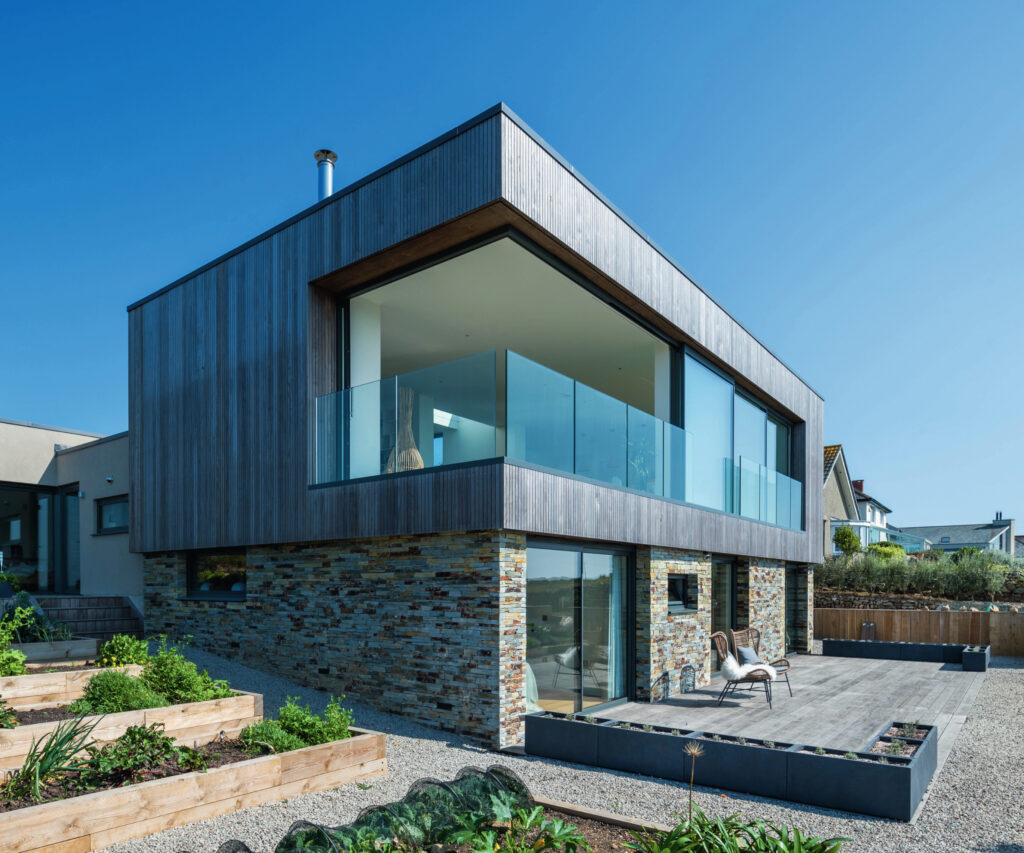
Scenario 2: The Contemporary Single-Family Home
A contemporary single-family home needs an updated appearance to attract buyers while retaining its structural layout.
-
Constraints: Strict zoning and a desire to minimize the weight of any new additions.
-
Decision Point: The renovation plan uses lightweight, fiber-cement rainscreen panels mounted directly onto the existing backup wall.
-
Failure Mode: Selecting an installation method that does not allow for air circulation behind the panels leads to moisture accumulation and rotting of the structural sheathing.
-
Second-Order Effect: The new rainscreen changes the wind load profile of the building, requiring stronger anchor details at the corners.
Scenario 3: The Mid-Century Home Renovation
A mid-century home with large single-pane windows loses conditioned air and suffers from high glare.
-
Constraints: Historical preservation rules that prevent altering the exterior frame profile.
-
Decision Point: The team implements interior secondary glazing systems along with new Low-E coatings, preserving the original outer facade while improving thermal performance.
-
Failure Mode: Creating an unventilated gap between the original single pane and the new interior glazing causes the inner glass to overheat and break.
-
Second-Order Effect: The interior renovation reduces useable workspace by several inches per window opening.
Scenario 4: The Sloped Skylight Atrium
A leaking, point-fixed glass atrium roof requires an economical upgrade to reduce cooling loads.
-
Constraints: High interior temperature and limited roof-mounted equipment capacity.
-
Decision Point: The design uses applied solar-control films on the exterior along with localized spot repairs of the silicone seals.
-
Failure Mode: Applying a dark solar film to tempered glass without checking the heat absorption characteristics can lead to thermal stress cracking.
Planning, Cost, and Resource Dynamics
The initial capital expenditure for envelope improvements is typically offset by reductions in energy costs and lower long-term maintenance needs.
| System Intervention | Direct Cost Range (USD/ft2) | Lead Time (Weeks) | Impact on Building Energy Use |
| Applied Window Films and Sealant Repair | $8 – $22 | 2 – 4 | Minor Reduction |
| Exterior Insulation and Finish Systems (EIFS) | $14 – $32 | 6 – 10 | Significant Reduction |
| Rainscreen Sub-framing and Cladding | $28 – $65 | 8 – 14 | Moderate Reduction |
| Secondary Interior Glazing Systems | $22 – $48 | 6 – 12 | Exceptional Thermal Control |
| Window Replacement and Frame Modification | $45 – $95 | 10 – 16 | High Optimization Potential |
The Cost of Frugality: Attempting to reduce costs by using inexperienced contractors or skipping structural investigations can cause major envelope failures. Remedying such mistakes often costs more than the initial budget saved.
Tools, Strategies, and Support Systems
Executing a cost-sensitive facade renovation requires a specialized technical toolkit:
-
Infrared Thermography Cameras: Used to identify structural thermal bridges and areas with missing or degraded insulation before beginning the renovation.
-
WUFI Modeling Software: Simulates transient heat and moisture transport through multi-layer wall assemblies to prevent internal condensation.
-
Wind-Load Calculation Platforms: Software programs using ASCE 7 provisions to ensure the upgraded cladding meets local wind speed requirements.
-
Pull-Out Testing Equipment: Used to verify that existing anchor points can support the weight of the new cladding system.
-
THERM and WINDOW Software: Developed by the Lawrence Berkeley National Laboratory, these tools calculate two-dimensional heat transfer through frame details.
-
Facade Access Equipment Analysis: Assesses the need for scaffolding or swing stages during installation.
Risk Landscape and Failure Modes
Façade renewal projects are subject to several compounding failure modes:
-
Vapor Barrier Inversion: The installation of exterior insulation without a proper vapor retarder can trap moisture within the wall cavity, causing structural decay.
-
Anchor Galvanic Corrosion: Contact between dissimilar metals, such as steel fasteners and aluminum brackets, can cause galvanic corrosion and anchor failure.
-
Pillow Distortion: In large-format glass or metal panels, improper support spacing can cause the material to bend under wind loads.
-
Sealant Degradation: The use of incompatible silicone sealants can cause the material to lose elasticity and leak within five years.
Governance, Maintenance, and Long-Term Adaptation
A renovated facade requires a planned operational cycle to ensure its long-term integrity:
-
Quarterly Visual Inspections: Checking panel joints and perimeter sealants for signs of cracking or separation.
-
Drainage Path Verification: Inspecting weep holes in the frames to ensure water does not pool against the backup wall.
-
Air and Water Infiltration Testing (AAMA 501.2): Conducting field tests every five years to ensure the facade joints remain watertight.
-
Component Cleaning Cycles: Cleaning panels with the manufacturer-recommended solutions to prevent the buildup of airborne salt or pollutants.
Measurement, Tracking, and Evaluation
To determine if a facade renewal project is performing as intended, facility managers track several key performance indicators:
-
Leading Indicator: “Surface Temperature Uniformity.” Using infrared thermography to measure the temperature gradient across the new wall surface during cold weather.
-
Lagging Indicator: “Monthly Energy Utilization Intensity (EUI).” An increase in this metric may indicate air barrier leaks or moisture accumulation in the insulation.
-
Qualitative Signal: “Optical Clarity and Distortion.” Changes in optical performance indicate movement of the panels.
-
Documentation Example: Commissioning reports containing water penetration field test results according to AAMA 501.2 standards.
Common Misconceptions and Oversimplifications
-
“Adding insulation to the outside of any building is always safe”: If the existing wall includes a vapor-closed interior layer, adding exterior insulation can trap moisture within the wall cavity.
-
“All cladding materials reduce building loads”: Some rainscreen systems can increase the dead load on the structure, requiring foundation reinforcement.
-
“New coatings can make any glass perform like triple glazing”: While films reduce solar heat gain, they do not improve the U-factor to the same extent as a new insulated glass unit.
-
“Exterior renovations always require tenant relocation”: Rainscreen installations can often be completed from the exterior while the interior remains in use.
-
“Sealants last for the life of the cladding”: Exterior sealants must be replaced every 10 to 15 years to maintain a watertight envelope.
Ethical, Practical, or Contextual Considerations
The use of highly reflective, clear glass facades has unintended environmental consequences, primarily bird collisions and high urban heat island effects.
To mitigate these impacts, modern building codes require the inclusion of ultraviolet patterns or ceramic frits in the glass assembly. Incorporating these patterns allows the building to remain transparent to human occupants while remaining visible to migratory birds.
Conclusion: The Trajectory of Architectural Renewal
The field of facade renewal is shifting toward greater integration of digital, mechanical, and structural functions within the building envelope. The building skin is no longer a passive partition, but an active component that adapts to environmental variations. When you evaluate how to plan improvements, you must balance the physics of heat transfer with structural limits and environmental sustainability.
Designers who understand the long-term properties of the envelope can create buildings with lower energy consumption and long service lives. The future of architectural design lies in specifying dynamic, high-performance building skins that reduce reliance on mechanical conditioning systems.