How to Manage Glazing Acoustic Risks: Expert Engineering & Design Guide
The expansion of urban density and the widespread use of lightweight, high-strength building materials have fundamentally shifted how architects and engineers approach facade design. A building envelope is no longer an isolated physical barrier, but an acoustic filter exposed to external environmental noise and internal structural vibration. How to Manage Glazing Acoustic Risks. Managing the acoustic properties of glass facades requires an analytical approach to building physics and material properties.
Understanding how to manage glazing acoustic risks requires a firm grasp of wave mechanics, structural resonance, and sound isolation. When design or construction teams miscalculate the transmission loss of a glass partition or ignore the effects of acoustic flanking paths, the consequences reduce interior comfort and cause long-term operational issues. Chronic exposure to high decibel levels or poor speech intelligibility leads to occupant fatigue, lower productivity, and a drop in the commercial value of the asset.
This guide deconstructs the structural mechanisms, system variations, testing methodologies, and economic variables that govern sound propagation through architectural glass. By examining the physical reality of acoustic assemblies, this manual provides a clear, actionable methodology for specifying assemblies that remain quiet, efficient, and structurally sound for decades. The core goal is to control the transmission of sound energy without relying on heavy, non-structural additions that burden the building frame.
Understanding “how to manage glazing acoustic risks”
When professionals investigate how to manage glazing acoustic risks, they must treat the building envelope as an integrated acoustic system rather than an assembly of independent partitions. Sound transmission occurs when airborne or structural vibrations strike a building element, forcing it to flex and radiate acoustic energy into the adjacent space. The energy that passes through is influenced by the mass, stiffness, and damping characteristics of the construction assembly.
A common misunderstanding during the early design phases is the assumption that simply increasing the thickness of a glass pane will solve any low-frequency noise problem. In reality, if the partition system contains rigid structural connections or flanking paths through adjacent floors and ceilings, the sound will bypass the heavy partition entirely. Therefore, knowing how to manage glazing acoustic risks requires addressing acoustic decoupling, resilient frames, and continuous edge seals concurrently.
The primary goal of the designer is to ensure that the interior noise criteria (NC) ratings are not exceeded under worst-case exterior noise conditions. This performance metric is expressed through standardized parameters such as the Sound Transmission Class (STC) for airborne noise and the Weighted Sound Reduction Index ($R_w$) for international applications. If the performance of the system falls below the local design threshold, the space will suffer from poor speech privacy and unacceptable levels of acoustic disturbance.
Deep Contextual Background: System Evolution
The development of acoustic insulation in architecture began with the study of mass law during the early twentieth century. Early construction approaches relied on massive stone, brick, and dense masonry walls to block sound propagation. These structures were highly effective at sound isolation due to their physical mass, but they placed large dead loads on the foundation and limited spatial flexibility in contemporary office and residential buildings.
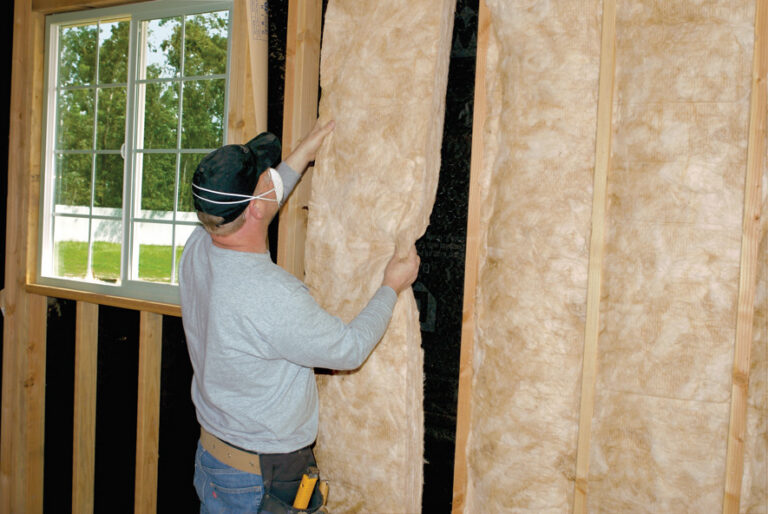
The introduction of lightweight glass facades and steel-frame construction in the mid-twentieth century significantly reduced the dead load of buildings, but created new acoustic vulnerabilities. These lightweight walls suffered from coincidence dips, where the bending wave velocity in the panel matched the airborne sound wave velocity, allowing sound to pass through the wall. This led to the development of multi-leaf partition systems featuring isolated wood or steel studs, fiberglass cavity insulation, and constrained-layer damping materials.
The development of specialized acoustic interlayers and resilient mounting clips in the 1980s and 1990s represented a significant improvement in low-frequency sound control. Today, modern acoustic technology relies on multi-layer glass assemblies combined with acoustic polymers and isolated frame connections. These configurations keep interior spaces quiet, even in noisy urban centers near transport hubs, without requiring massive, heavy structural supports.
Conceptual Frameworks and Design Models
To analyze sound movement and vibration within the building envelope, experienced engineers use several core frameworks:
-
The Mass Law Model: This framework plots the sound transmission loss against the mass per unit area of a partition, showing that transmission loss increases by approximately 6 decibels for each doubling of mass or frequency.
-
The Resonant Frequency Framework: This approach focuses on the mass-spring-mass resonance of a double-leaf partition, which can amplify sound transmission at specific low frequencies if not properly damped.
-
The Coincidence Effect Model: This framework identifies the frequency at which the wavelength of sound in the air matches the wavelength of bending waves in the glass pane, leading to a dip in acoustic performance.
-
The Statistical Energy Analysis (SEA) Framework: A modeling method used to evaluate the transfer of vibrational energy through complex structural networks and continuous flanking paths.
Technical Classifications and System Variations
Understanding the differences between the systems used to manage sound propagation requires analyzing the internal configuration of the partitions, ceilings, and access assemblies.
Classification of Acoustic Control Systems
| System Category | Makeup Description | Acoustic Performance | Best Application | Trade-Offs & Vulnerabilities |
| Monolithic Glass | Solid pane of annealed or tempered glass | Low STC ($STC \le 28$), poor low-frequency damping | Interior displays | Fragile, poor thermal performance |
| Laminated PVB Glass | Two lites with a polyvinyl butyral core | Moderate STC ($STC \approx 35$), good damping | Exterior windows | Susceptible to edge delamination |
| Asymmetric IGU | Two panes of different thickness with gas gap | High STC ($STC \approx 39$), stops coincidence dip | Urban facades | Higher production cost |
| Acoustic Resin Lami | Multi-layer resin-core or ionoplast makeup | Very high STC ($STC \ge 42$), structural properties | High-speed rail corridors | High initial material cost |
| Double-Leaf Facade | Two independent glass leaves with air cavity | High low-frequency isolation ($R_w+C_{tr} \ge 38$) | Recording studios | Large floor footprint required |
| Acoustic Louver | Integrated window ventilation with baffle | Moderate STC ($STC \approx 32$), allows airflow | Residential towers | Reduced airflow rate |
| Viscoelastic Damping | Laminated glass with damping polymer core | Exceptional performance, stops low-frequency rumbles | Airport hotels | Specialty handling required |
Choosing the appropriate system variation requires careful decision logic. For instance, an engineer designing an urban residential building near a transit line needs to know how to manage glazing acoustic risks without letting low-frequency rumble pass through the facade. In this case, specifying a multi-layer acoustic laminated glazing makeup with an asymmetric thickness profile is the most effective choice because it changes the resonance frequencies of the lites, stopping the transfer of noise.
Detailed Real-World Scenarios and Decision Logic How to Manage Glazing Acoustic Risks

Scenario A: The Multi-Family Dwelling Unit Partition
An apartment unit shares a vertical wall with a utility corridor that contains high-speed elevator shafts and mechanical ventilation systems.
-
The Constraint: The window facing the corridor must prevent the low-frequency mechanical rumble from entering the bedroom, while maintaining a thin profile to maximize the usable square footage of the apartment.
-
Decision Point: The designer must choose between a resilient channel window frame and an isolated acoustic double-leaf glass system.
-
Analysis of Options:
-
Option 1 (Resilient Channel Window Frame): The thin profile saves space, but the structural screws can short-circuit the channels if installed incorrectly, rendering the partition ineffective against low-frequency hums.
-
Option 2 (Isolated Double-Leaf Glass System): The double-leaf assembly provides an air gap between the rooms, preventing the direct transfer of low-frequency energy.
-
-
Second-Order Effect: The thick partition profile reduces the floor area of the apartment by a small margin, requiring an adjustment to the spatial floor plan.
Scenario B: The Open-Plan Executive Conference Room
A conference room in a corporate headquarters requires high speech privacy so that sensitive financial discussions cannot be heard in the adjacent open-plan office.
-
The Constraint: The floor slab is continuous beneath the glass wall, and the ceiling plenum is open across both spaces, which allows sound to flank around the wall.
-
Decision Point: Should the team extend the partition to the structural deck above and install an active sound masking system, or use a standard ceiling-height wall with acoustic drop tiles?
-
Analysis of Options:
-
Option 1 (Partition to Structural Deck): This approach stops sound from passing through the ceiling plenum, but requires careful detailing around the ducts and electrical conduit penetrations.
-
Option 2 (Ceiling-Height Wall): Sound flanking over the wall through the open plenum makes the partition useless for speech privacy.
-
-
Failure Mode Analysis: Failing to seal the penetrations through the structural deck creates an acoustic leak, which allows sound to bypass the partition.
Scenario C: The Urban Music Practice Room
A music practice room is located on the second floor of an educational facility, situated directly above a quiet library space.
-
The Constraint: The practice of musical instruments generates high airborne sound pressure levels and impact noise from footfalls and equipment cases.
-
Decision Point: Should the team install drop ceiling tiles, or construct a floating floor system with a suspended acoustic ceiling?
-
Analysis of Options:
-
Option 1 (Drop Ceiling Tiles): These absorb the airborne sound within the room but do not stop the low-frequency vibrations from traveling through the floor structure.
-
Option 2 (Floating Floor System): The floating floor decouples the practice room’s concrete slab from the main building frame, controlling both airborne and structure-borne sound.
-
-
Second-Order Effect: The floating floor adds dead load and raises the floor level, requiring modifications to adjacent doorways and thresholds.
Scenario D: The Hotel Suite Near a Highway
A hotel development is located near a busy highway, and guest room windows face the road, letting in high-decibel traffic noise.
-
The Constraint: The windows must be kept closed to meet interior noise criteria, requiring a mechanical ventilation system that does not act as an acoustic path.
-
Decision Point: Should the team install standard double-pane glazing and long ventilation ducts, or an acoustic double-leaf facade with integrated silencers?
-
Analysis of Options:
-
Option 1 (Standard Double Glazing): This configuration allows low-frequency truck noise to enter the room, leading to guest complaints and poor reviews.
-
Option 2 (Double-Leaf Facade with Silencers): The heavy acoustic glass, combined with an internal ventilation silencer, lowers interior noise levels below the maximum threshold.
-
-
Compounding Risk: The system is expensive and requires regular maintenance of the duct silencers to remove accumulated dust.
Planning, Cost, and Resource Dynamics
The financial framework of an acoustic design project is sensitive to design oversights. When common structural errors are corrected during the construction phase, the costs can be many times higher than if the issue had been caught during the early engineering review.
Estimated Cost Variance of Remediation
| Phase of Discovery | Cost Factor (Multiplier) | Primary Cost Drivers |
| Concept / Design Phase | 1.0x | Modified partition specification, resilient clips |
| Fabrication Phase | 2.5x – 4.0x | Custom glass makeups, structural reinforcing |
| Construction Phase | 10.0x – 20.0x | Demolition of drywall, installation of new studs |
| Post-Occupancy Phase | 50.0x+ | Tenant relocation, litigation, retrofitting ceiling systems |
Opportunity costs are prevalent in this market. Choosing large-format glass lites or heavy drywall assemblies requires specialized hoisting equipment and installation labor. Furthermore, if the incorrect acoustic material is delivered to the site, the replacement lead times for specialty products can delay the entire project schedule by several months.
Tools, Strategies, and Technical Support Systems
To design with the best options and manage glazing acoustic risks, engineers use several analytical and testing platforms:
-
Acoustic Camera Systems: Used to visualize and locate the source of acoustic leaks or flanking paths in the building partition.
-
Sound Level Meters and Real-Time Analyzers: Tools used to measure background noise levels and calculate reverberation time in accordance with ISO standards.
-
INSUL Software: A software program used to predict the sound transmission loss of walls, floors, and windows across different frequencies.
-
Full-Scale Reverberation Chambers: Used to test full-scale mock-ups of partition assemblies under laboratory conditions to verify STC and IIC ratings.
-
Impact Tapping Machines: Devices used to simulate footfall noise on floor assemblies to measure impact insulation performance.
-
Three-Dimensional Acoustic Mapping Software: Platforms used to simulate sound propagation in auditoriums, open-plan offices, and performance spaces.
The Risk Landscape: Structural Vulnerabilities and Failure Modes
Understanding the risk landscape and identifying compounding failure modes is critical when learning how to manage glazing acoustic risks.
-
Flanking Transmission via Utility Penetrations: When pipes and electrical conduits pass through an acoustic wall, they create an air path that bypasses the partition material.
-
Edge-Sealing Failure: The loss of the resilient edge seal allows noise to pass through the gap between the wall and the floor slab.
-
Short-Circuiting of Resilient Mountings: The installation of rigid screws or fixtures through resilient channels connects the gypsum board directly to the stud, rendering the system ineffective.
-
Stack Effect in Wall Cavities: Vertical gaps in partition cavities can create acoustic paths that allow sound to travel between different floors.
-
Acoustic Leaks in Window Mullions: Improper sealing of the joints between the aluminum framing system and the adjacent masonry lets airborne noise bypass the glass.
Governance, Maintenance, and Long-Term Adaptation
Acoustic structures require a formal governance structure and a dedicated maintenance schedule to achieve their intended design life.
The Layered Maintenance Checklist
-
Bi-Annually: Inspect wall perimeters and partitions for signs of cracking or detachment of the acoustic sealant.
-
Every Five Years: Perform a detailed transfer function test of the partition assemblies to ensure no degradation of the damping materials.
-
Replacement Triggers: Replace any deteriorated gaskets or isolators around doors and windows that show signs of compression set or physical damage.
-
Documentation and Records: The facility manager must maintain a digital log of the STC and NRC makeups, batch numbers, and installation locations of every partition on site.
Measurement, Tracking, and Evaluation
Assessing the performance of an acoustic system requires both quantitative and qualitative methods:
-
Leading Indicators: Real-time data from vibration sensors attached to the structural floor, monitoring impact noise and resonance during building operations.
-
Lagging Indicators: The frequency of occupant complaints regarding lack of speech privacy or excessive background noise levels.
-
Documentation Examples:
-
Acoustic Laboratory Test Certificates: Documents verifying the STC and NRC ratings of the installed materials.
-
Commissioning Reports: Records verifying that the partitions were installed without structural leaks.
-
Field Measurement Surveys: Measurements comparing the structural design targets with the as-built performance.
-
Common Misconceptions and Oversimplifications
-
Myth: Increasing the thickness of a glass pane always improves acoustic insulation.
-
Correction: Thick panes suffer from coincidence dips at certain frequencies, which can reduce the transmission loss across that specific frequency band.
-
-
Myth: A drop ceiling provides complete speech privacy between adjacent offices.
-
Correction: Sound passes through the ceiling plenum unless the wall partition extends to the structural deck above.
-
-
Myth: Resilient channels can be used on both sides of a double-stud wall.
-
Correction: This configuration can cause the system to resonate at low frequencies, which increases sound transmission.
-
-
Myth: Acoustic foam panels applied to a wall reduce outside noise transmission.
-
Correction: Acoustic foam panels absorb interior echoes but do not provide significant airborne sound isolation.
-
-
Myth: Heavy masonry partitions are always the best choice for acoustic isolation.
-
Correction: Masonry partitions can be subject to low-frequency flanking and are difficult to modify as tenant needs change.
-
-
Myth: Argon gas in double glazing improves acoustic performance.
-
Correction: Argon gas is used for thermal insulation; its effect on airborne sound transmission is negligible compared to air.
-
Ethical and Contextual Considerations
The specification of acoustic assemblies involves significant sustainability responsibilities. The production of acoustic insulation materials such as mineral wool and dense gypsum board generates considerable embodied carbon. Engineers and designers should balance the desire for acoustic isolation with the need for low-energy consumption over the building’s lifecycle.
Furthermore, interior acoustic treatments must consider the health of the building’s occupants. Many older insulation products contain materials that release fibers and volatile organic compounds into the interior air supply. Ethical design considerations require the use of materials with low VOC emissions, certified by independent organizations, to avoid the risk of respiratory illness.
Synthesis and Editorial Perspective
The design and construction of acoustic isolation systems demand intellectual honesty, attention to detail, and strict engineering discipline. The history of building failures shows that most issues are not caused by the weakness of the material itself, but by the failure to correctly evaluate how to manage glazing acoustic risks across the whole structure. Understanding the limits of the material allows engineers to create envelopes that are both quiet and safe.
The future of the building skin lies in integrated design, where the interface between partition, floor, and structure is fully coordinated. As we move toward a carbon-neutral built environment, the measure of a successful facade will no longer be how heavy it appears, but how well it performs over the life of the building. The mastery of these details is what separates a short-term architectural trend from an enduring work of engineering.