How to Reduce Glazing Repair Costs: Expert Engineering & Design Guide
The modern approach to architectural facades has shifted from viewing windows as simple wall infill to treating them as complex environmental filters. Today’s building skins must withstand heavy wind loads, balance solar heat gain, and provide acoustic insulation, all while maintaining long-term durability. How to Reduce Glazing Repair Costs. When a building envelope fails to perform, the operational and financial consequences can be severe.
Understanding how to reduce glazing repair costs is a critical engineering challenge for property managers, architects, and facility operators. When teams treat maintenance and window replacement as separate, isolated tasks rather than a unified system, vulnerabilities appear throughout the building. For example, replacing an insulating glass unit (IGU) without addressing a failing frame seal simply resets the deterioration cycle, leading to premature failure and increased costs.
To ensure long-term efficiency and structural integrity, decision-makers must blend material science with practical building physics. This comprehensive reference document explores the engineering mechanics, system variations, testing methodologies, and economic variables that govern large-scale structural glass facades. By exploring the physical behavior of building systems, this guide provides a systematic methodology for specifying assets that remain efficient over their design life.
Understanding “how to reduce glazing repair costs”
Investigating how to reduce glazing repair costs requires a clear understanding of the thermodynamic and mechanical forces that drive the deterioration of the building envelope. Glass and its associated sealants and framing systems are continuously exposed to dynamic weathering. These forces include ultraviolet (UV) radiation, differential thermal expansion, moisture accumulation, and cyclic wind loads. The primary goal of the engineering and maintenance team is to minimize the rate of degradation while extending the service life of the individual components.
A common oversight during the budgeting and operation phase is assuming that repairs should only occur after a visual failure, such as seal breakage or cracked glass. In practice, waiting for complete failure greatly increases expenditure due to emergency call-out charges, custom fabrication lead times, and associated interior water damage. For instance, allowing a failed edge seal to go unnoticed leads to internal condensation, which oxidizes low-emissivity coatings and ruins the insulated unit, turning a minor gasket adjustment into an expensive glass replacement project.
Furthermore, the operational dynamics of the modern facade introduce additional complexity. Airtight and structurally glazed envelopes create interior environments that require routine inspection of structural silicone joints and mechanical fasteners. Understanding how to reduce glazing repair costs means analyzing the system as a whole. This includes evaluating heat transfer through thermal bridges, testing air infiltration rates, and monitoring the deflection of the structural framing under wind load.
Deep Contextual Background: System Evolution
The evolution of energy-efficient facade design began in earnest during the global oil shocks of the 1970s. Before this period, energy was inexpensive, and buildings were designed with little consideration for thermal resistance or system efficiency. Early structures relied on large HVAC systems to overcome the thermal losses and gains of thin, uninsulated envelopes. These systems were designed using simple rules of thumb that did not account for the dynamic thermodynamic interaction between the building and its environment.
The 1980s and 1990s saw the introduction of early energy codes and performance standards, such as ASHRAE 90.1 in the United States and the Passivhaus standard in Europe. These frameworks introduced new requirements for envelope insulation, double-glazed windows, and equipment efficiency. However, the lack of sophisticated simulation tools meant that designers could not easily predict the actual energy use of a building before construction. This limitation often resulted in buildings that performed differently than their design documents suggested.
Throughout the early twenty-first century, the development of computer-aided building energy modeling and the proliferation of high-performance materials transformed the industry. Laminated low-emissivity glass, variable refrigerant flow (VRF) heat pumps, and smart building sensors made it possible to design structures that consume a fraction of the energy of their predecessors. Today, the design process requires an integrated approach that models the building throughout its entire life cycle, tracking both embodied and operational energy use.
Conceptual Frameworks and Design Models
To analyze energy use and material performance in buildings, experienced engineers use several specific conceptual frameworks and mental models:
-
The Thermodynamic Energy-Balance Model: This framework models the balance between all heat gains and losses within the building, calculating the exact heating and cooling loads required to maintain occupant comfort.
-
The Thermal-Mass Integration Continuum: This model focuses on the delay and dampening of temperature swings through materials with high heat capacity, such as thick concrete or masonry walls, which shift peak cooling and heating loads to off-peak hours.
-
The Exergy Analysis Framework: This approach evaluates energy quality, ensuring that the temperature of the energy supplied matches the temperature required by the end use, thus minimizing thermodynamic losses.
-
The Psychrometric Phase-Change Model: This framework plots the state of the indoor air against its temperature and relative humidity, calculating the exact dew point at which water vapor transitions into a liquid state on a cold glass surface.
Technical Classifications and System Variations
Understanding the differences between energy efficiency and system preservation strategies requires an analysis of their internal mechanisms and operational profiles. The following categories represent the primary systems used to improve thermal performance and protect the facade.
Classification of Efficiency and Preservation Variations
| Strategy Category | Mechanism Description | Mechanical Behavior | Best Application | Trade-Offs & Vulnerabilities |
| High-Performance Envelopes | Continuous exterior insulation and high-performance glazing | Reduces conductive and convective heat transfer | All climates, especially extreme heating/cooling zones | High initial material cost, potential moisture accumulation |
| Variable Refrigerant Flow (VRF) | Modulating refrigerant systems serving multiple zones | High part-load efficiency; simultaneous heating/cooling | Large commercial and mixed-use buildings | Complex piping layout, potential refrigerant leakage risk |
| Energy Recovery Ventilation (ERV) | Heat and moisture exchange between incoming and exhaust air | Maintains indoor air quality while reducing ventilation load | Airtight residential and institutional buildings | Requires regular filter cleaning and maintenance |
| Smart Lighting and Daylighting | LED integration with automatic dimming and occupancy sensors | Reduces lighting energy use when natural light is present | Open-plan offices, educational facilities | Higher controls cost, complex initial commissioning |
| Photovoltaic Energy Generation | Monocrystalline or thin-film solar arrays on roof/facade | Converts solar irradiance directly into electrical power | Buildings with large roof areas and high sun exposure | Intermittent output, requires battery or grid connection |
| Thermal Energy Storage | Ice or chilled water tanks generated during off-peak hours | Shifts cooling loads to periods of lower electrical demand | Large buildings with high cooling loads | Large footprint requirements for equipment |
| Dynamic Shading Systems | Automated exterior louvers tracking the sun’s path | Minimizes solar heat gain while maintaining daylight | High-glare glass facades, west-facing walls | Vulnerable to mechanical breakdown and wind damage |
When developers analyze how to reduce glazing repair costs, the decision logic often starts with the building envelope. By reducing the heating and cooling loads through insulation and airtightness, the size and capacity of the mechanical equipment can be downsized. For example, a residential project designed to Passivhaus standards can use small heat pump systems, reducing both the initial equipment cost and the ongoing operational energy footprint.
Detailed Real-World Scenarios How to Reduce Glazing Repair Costs
The practical execution of thermal planning depends on local constraints, climatic exposures, and building geometries.
Scenario A: The Commercial Office Retrofit
A 12-story office building constructed in the early 1980s with single-pane glass facades experiences high cooling costs and occupant complaints regarding drafts and temperature swings.
-
The Constraint: The existing concrete frame cannot support the load of a traditional heavy curtain wall replacement without structural reinforcement.
-
Decision Point: Should the engineering team replace the entire facade with a unitized double-skin facade, or install an interior secondary glazing system with automated exterior venetian blinds?
-
Analysis of Options:
-
Option 1 (Double-Skin Replacement): This option provides excellent thermal performance and modernizes the building’s appearance, but the cost and weight exceed the structural budget.
-
Option 2 (Secondary Glazing with Shading): This option reduces the solar heat gain coefficient without adding significant weight, while keeping the interior operational during installation.
-
-
Second-Order Effect: The addition of interior secondary glazing reduces the usable floor area of the perimeter offices by a small margin, requiring an adjustment to the spatial programming.
Scenario B: The Multi-Family Passive House Design
A new multi-family residential building in a cold climate must meet strict operational energy limits while keeping construction costs within a tight budget.
-
The Constraint: The project site is oriented with its long axis facing east and west, resulting in high solar gains in the afternoon that can cause overheating during the summer months.
-
Decision Point: Should the team specify dynamic exterior shading devices or install high-capacity active air conditioning units?
-
Analysis of Options:
-
Option 1 (Active Air Conditioning): Air conditioning units increase both the peak electrical demand and the long-term maintenance costs for the building’s residents.
-
Option 2 (Dynamic Shading): Exterior louvers block solar radiation before it hits the glass, preventing heat from entering the building and eliminating the need for active cooling equipment.
-
-
Failure Mode Analysis: The dynamic shading mechanism can be damaged by high winds if the control system fails to retract the louvers during severe weather events.
Scenario C: The Educational Facility Ventilation Upgrade
An educational facility experiences poor indoor air quality and rising energy costs due to high occupancy loads in its lecture halls.
-
The Constraint: The existing ductwork is undersized and cannot accommodate the increased airflow rates required by current health standards without extensive demolition of the ceilings.
-
Decision Point: Should the team install a decentralized ventilation system in each classroom, or upgrade the central air handling unit with high-efficiency fan arrays?
-
Analysis of Options:
-
Option 1 (Central Air Handling Unit): This requires replacing all the ductwork throughout the building, disrupting operations and greatly exceeding the budget.
-
Option 2 (Decentralized Systems): Decentralized ventilation units are placed directly in each room, requiring only short runs to the exterior and reducing fan energy use.
-
-
Second-Order Effect: Decentralized units create local mechanical noise, requiring acoustic attenuation to prevent the equipment from disturbing classroom activities.
Scenario D: The Supertall Hotel Energy Management
A supertall hotel located in a hot, humid climate struggles with high chiller energy use due to humidity infiltration from guest room doors opening to the exterior corridor.
-
The Constraint: The hotel must maintain positive air pressure in the corridors to prevent moisture infiltration, but guest activities allow humid air to enter the conditioned spaces.
-
Decision Point: Should the team install local dehumidifiers in every room, or convert the central HVAC system to a dedicated outdoor air system (DOAS) with energy recovery?
-
Analysis of Options:
-
Option 1 (Local Dehumidifiers): Local units require ongoing maintenance in each room and generate significant noise, disrupting the guest experience.
-
Option 2 (DOAS Conversion): The DOAS system conditions and dehumidifies the outside air before supplying it to the building, maintaining positive pressure and reducing overall energy use.
-
-
Compounding Risk: The installation requires careful balancing of the air distribution system across the height of the tower to account for stack effects.
Planning, Cost, and Resource Dynamics
The financial architecture of an efficiency project is sensitive to the design, specification, and procurement processes. When design teams address efficiency measures early in the design phase, the cost to implement them is often offset by the reduction in mechanical equipment size.
Estimated Cost Variance of Efficiency Strategies
| Phase of Discovery | Cost Factor (Multiplier) | Primary Cost Drivers |
| Concept / Design Phase | 1.0x | Energy modeling, envelope optimization, daylight analysis |
| Procurement Phase | 1.5x – 2.5x | Higher-performance materials, high-efficiency equipment |
| Construction Phase | 1.1x – 1.3x | Specialized labor for airtightness and system commissioning |
| Operations Phase | 0.3x – 0.6x | Reduced utility costs, lower equipment maintenance needs |
Opportunity costs are often found in the schedule of construction. If a project uses high-performance structural insulated panels, the shell goes up faster than a traditional concrete block structure, allowing interior trades to start earlier and reducing financing costs.
Tools, Strategies, and Technical Support Systems
To analyze how to reduce glazing repair costs, design and operations teams use several analytical and testing platforms:
-
Building Energy Modeling (BEM) Software: Programs such as EnergyPlus, IESVE, or TRNSYS simulate thermal loads and energy use across the year under variable conditions.
-
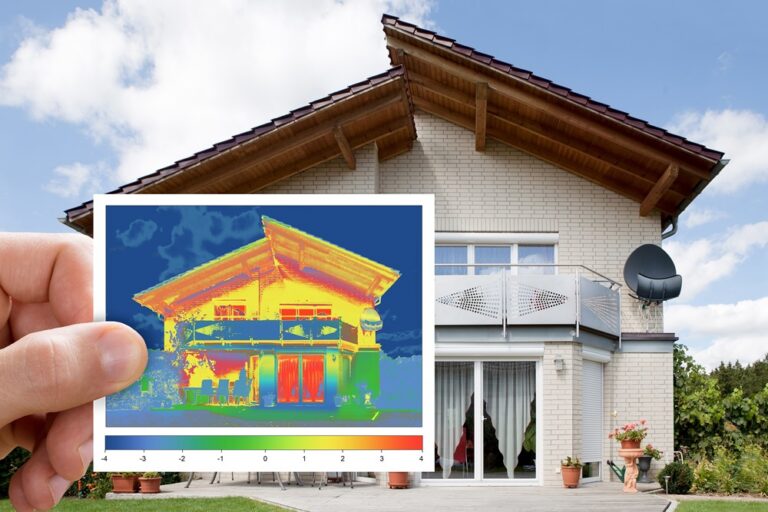
Thermographic Cameras: Used to detect areas of high heat loss and identify thermal bridges around window frames and spandrel zones.
-
Computational Fluid Dynamics (CFD) Modeling: Used to simulate air movement and temperature distribution within large spaces, optimizing natural ventilation and thermal comfort.
-
Automated Building Management Systems (BMS): Software and hardware platforms that monitor and control lighting, heating, and cooling based on occupancy and schedules.
-
Blower Door Testing Equipment: Used to measure the airtightness of the building envelope, ensuring that uncontrolled infiltration is minimized.
-
Submetering Systems: Hardware used to monitor energy consumption across different floors or equipment types, allowing operators to isolate inefficient processes.
The Risk Landscape: Structural Vulnerabilities and Failure Modes
Understanding the risk landscape and identifying compounding failure modes is critical to specifying efficiency upgrades.
-
Moisture Accumulation in Highly Insulated Walls: When insulation levels are increased without an interior vapor retarder, moisture can enter the wall cavity and condense on cold structural elements, leading to mold growth and wood rot.
-
Airtightness and Indoor Air Quality: Making a building envelope too tight without providing mechanical ventilation with heat recovery leads to a buildup of carbon dioxide, volatile organic compounds, and moisture.
-
The Performance Gap: This occurs when the operational energy use of the building exceeds the predictions of the energy model due to installation flaws or poor operational practices.
-
Control System Complexity: Automated management systems can be complex for building operators to manage, leading to manual overrides that increase energy consumption.
-
Thermal Bridging via Aluminum Frames: When a highly conductive frame element connects the interior and exterior environments, the interior metal temperature drops below the dew point, resulting in localized water collection.
Governance, Maintenance, and Long-Term Adaptation
High-efficiency buildings require a formal governance structure and a dedicated maintenance schedule to ensure their systems operate properly over a 30-to-50-year design life.
The Layered Maintenance Checklist
-
Quarterly Inspections: Inspect filters in all energy recovery ventilators and clean or replace them to maintain airflow and efficiency.
-
Bi-Annual Commissioning Reviews: Test the operation of dynamic shading systems and calibrate all temperature and occupancy sensors.
-
Annual Envelope Testing: Perform blower door testing to check for the development of air leaks caused by settlement or material degradation.
-
Five-Year System Audit: Update the control software and review energy usage records against the building’s initial energy performance target.
Measurement, Tracking, and Evaluation
Assessing the performance of a building requires both quantitative and qualitative methods:
-
Leading Indicators: Continuous measurements from smart energy meters, monitoring equipment performance and part-load efficiency on a daily basis.
-
Lagging Indicators: The total annual energy use intensity (EUI), measured in kilowatt-hours per square meter per year, compared with the building’s design target.
-
Documentation Examples:
-
The Energy Log: A database tracking energy use across different submetered systems.
-
Commissioning Reports: Records verifying that all mechanical equipment functions according to the design intent.
-
Airtightness Test Certificates: Documentation confirming that the building meets envelope air-leakage standards.
-
Common Misconceptions and Oversimplifications
-
Myth: Adding more insulation always reduces energy consumption.
-
Correction: In cooling-dominated climates, high insulation levels can trap internal heat if the building lacks solar shading or ventilation.
-
-
Myth: Automated lighting controls save energy without proper commissioning.
-
Correction: Without proper commissioning, automated lights can turn on when unnecessary, increasing energy use.
-
-
Myth: All LED retrofits yield the same efficiency gains.
-
Correction: Replacing old fixtures with LEDs without considering the layout can result in over-illumination and wasted energy.
-
-
Myth: A tight building envelope cannot breathe.
-
Correction: Airtightness prevents uncontrolled air infiltration; ventilation must be managed by mechanical recovery systems.
-
-
Myth: Large windows always increase energy consumption.
-
Correction: When windows are specified with the correct solar heat gain coefficient and orientation, they can reduce heating and lighting loads.
-
-
Myth: Smart thermostats reduce energy use in all building types.
-
Correction: Smart thermostats are most effective when programmed correctly for occupant schedules.
-
-
Myth: All structural glass is equally strong.
-
Correction: The strength of an assembly depends on the heat treatment (tempered vs. annealed) and the composite action of the interlayer.
-
Ethical and Contextual Considerations
The effort to improve thermal performance in buildings has major implications for the environment and society. The manufacturing of high-performance building materials and smart mechanical systems generates considerable embodied carbon. Architects and designers must balance the energy saved during the operation of the building with the emissions generated during material production.
Furthermore, building design must consider the impact of transparency on wildlife populations and surrounding ecosystems. The reflection of trees and sky on glass facades causes millions of bird strikes each year. Modern building codes are increasingly requiring that envelopes include frit patterns, ultraviolet coatings, or external shading devices that make the glass visible to birds while reducing the solar heat load on the building.
Synthesis and Editorial Perspective
The effort to avoid low thermal efficiency and reduce glazing repair costs requires technical discipline, attention to detail, and intellectual honesty. A high-efficiency structure is an integrated composite that must be engineered to withstand the effects of wind, solar radiation, and variable occupant loads.
As we continue to push toward a carbon-neutral built environment, the measure of a successful design will no longer be how much energy it produces, but how little it requires to function. The mastery of these details is what separates a short-term architectural trend from an enduring work of engineering.